From the readings of this Holy Thursday, some common elements resonate within me: what do these signs have to say to us today? What good news is being announced to us?
The passing of God in the night: “I will pass through Egypt this night” (Ex 12:12). “On the night he was betrayed, the Lord Jesus…” (1 Cor 11:23b); the passage following the washing of the feet concludes by saying, “and it was night” (Jn 13:30b). The disciples felt the weight of that night, of their own darkness, doubts, and misunderstandings. Yet that night became the setting of God’s victory; and, astronomically speaking, that night is illuminated by a full moon (of the equinox); “There is no more night, you are light.” Once again, God shows us that nothing lies outside of Him. God “leaps over” our nights; even there His love and presence arrive: “even the darkness is not dark to you; the night is as bright as the day.”
The meal: In the Exodus, God asks them to eat quickly, perhaps reminding them of the condition from which they were about to be freed. I recall a friar who, when we asked him what characterizes or distinguishes us as a congregation, humorously replied, “eating quickly.” Thus today many who work all day—somehow dominated by time, rushing, being here and there, going back and forth—tend to eat this way and then grow accustomed to it. May this “eating quickly” not become the slavery of activism, individualism, failure to delegate, or an unshared mission… but rather a saving haste, because “the love of Christ urges us on,” and because we are going forth, walking as a people.
In the journey of the Exodus, the accounts that follow the Passover continue to show powerful and eloquent details. God responds in His own way. Four hundred and thirty years of waiting (Ex 12:40)—enough to calm the anxiety of our times. And another forty years wandering in the desert. He even led them by the longer route so that they would not turn back (Ex 13:17). It seems they had reason to complain: what did God want? What was the point? It is not easy to understand the ways of the Lord: “What I am doing you do not understand now, but later you will understand.” All that remains is trust: that there is a plan, a promised land, a covenant, a new and full life that becomes reality in God’s way.
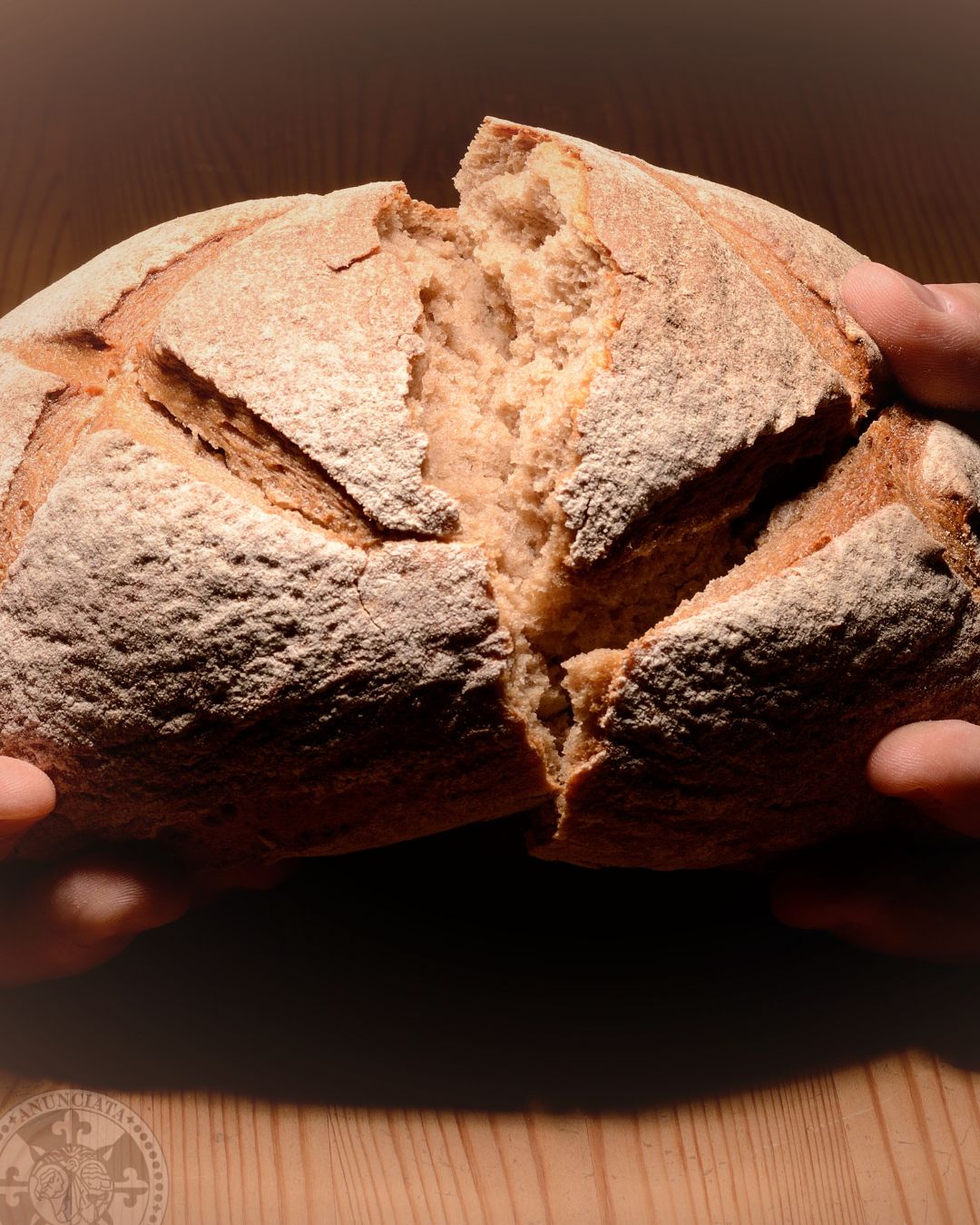
In the New Testament, this meal is memory, presence, and for all. Saint Paul insists on a worthy way of sharing in the Lord’s Supper. In this context, the washing of the feet is a prophetic gesture without words, evoking self-giving and humility. Judas and Peter show that they have understood nothing of the kind of messianism Jesus wants to teach them. Neither wants their master to lower Himself. Both—and the others in silence—fail to understand what Jesus is doing. He always identifies with the least; His leadership comes from below. This is also difficult to understand today in a success-driven mindset.
Kenosis: it appears throughout the liturgy of this day. God lowers Himself to where the oppressed people are. Jesus kneels at our feet. He becomes a servant, empties Himself of His condition… “He humbled Himself, becoming obedient…” Yet He knows who He is. His way reminds us of the paradox of God’s reign: “Whoever humbles himself will be exalted; whoever dies will live; whoever loses his life for my sake will find it…” Jesus shows us the reverse path: a new order, a new leadership, the revolution of love.
I think of the poem by Pedro Casaldáliga: “My body is food. Fraternal and subversive Eucharist”; a shared table as brothers and sisters, without distinctions, categories, or ranks. In the same line as Saint Paul: Jews, Greeks, slaves, masters, rich, poor… in “unity of classes”; that is the true Lord’s Supper. How difficult it is for us today to understand and live this; to leave aside rebellions, egos, pride, triumphalism, and superiority complexes. As soon as we feel diminished, we react; we cannot bear being stepped over, and we want to put in their place those who dare to place us below. A fraternal and subversive Eucharist, of a God gentle and humble of heart.
To be disciples of Jesus is to go against the current—even against ourselves; it is to bend for a greater good, because it contains a seed of transformation, in silence, from what is small, or in the night. Only the simple, the humble, the peaceful, the free—the “blessed”—can understand and live according to this logic.
In these days, it has appeared on social media that the sixth season of the series “The Chosen” is being filmed. The posts show what it has meant for the actors and their director to relive each moment of Jesus’ passion; they have felt it in their own flesh. Hearing these readings so many times, we can fall into the temptation of trivializing their message, becoming accustomed, hearing the same as always: “what new thing can they tell us?”—especially since we already know the ending. We are His disciples today; let us place ourselves in some corner, receive this mystery of love with a trembling heart. Let us live this Holy Week as if for the first time, as good news.
Sr. Patricia Contreras
Province of Santa Rosa de Lima