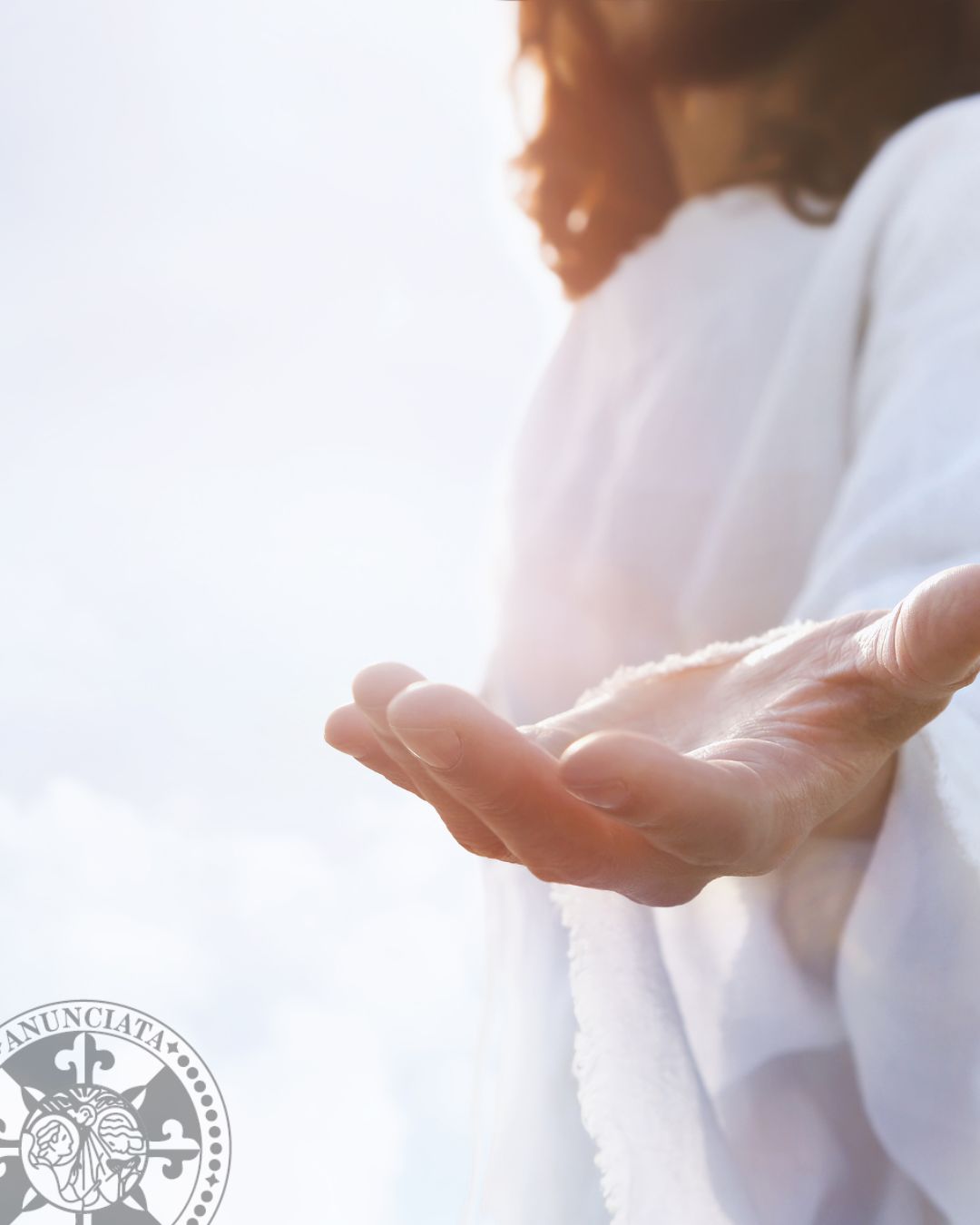
The Second Sunday of Easter, also known as Divine Mercy Sunday, invites us to deeply contemplate the merciful love of God manifested in the Resurrection of Christ. In the Gospel (John 20:19–31), we see how the risen Jesus appears to his disciples, offering peace and sending them to proclaim the Good News. His main word is: “Peace be with you.” He also shows the wounds of his passion, a visible sign of the mercy that led him to give himself for us.
The divine mercy we celebrate today — a love that goes out to meet us, heals wounds, and transforms fear into faith — implies, on a personal level, opening our hearts to the experience of forgiveness, reconciliation, and trust in the infinite love of God. It is an invitation to recognize our own limitations, mistakes, and wounds, so that divine mercy may transform us and move us to live with humility and compassion toward others. I may ask myself:
- How can I open myself more to God’s mercy in my daily life?
- How can I practice mercy in my daily actions, especially toward those I find difficult?
- How can I help others discover that, even in the midst of suffering, divine mercy is present and at work?
Moreover, mercy is a divine force that urges us to be agents of reconciliation and peace amid the wounds of the world. It challenges us to live as trustworthy witnesses of God’s love, especially in a world that often feels wounded, fragmented, or without hope. It invites us not to respond to violence with more violence, but to act with justice, forgiveness, and solidarity; to look at others with renewed eyes, recognizing human dignity beyond conflict or difference; and to be artisans of peace in our communities — that is, to be living channels of mercy for all, especially for those most in need.
Furthermore, the experience of Thomas in the Gospel, who needs to touch Jesus’ wounds in order to believe, speaks to us of the need to confront the reality of suffering without denying or numbing it, in order to discover there the healing and liberating presence of God. In a wounded world, divine mercy offers us the certainty that no wound is so deep that God’s love cannot heal it.
As we celebrate the Vocationl Year, this Feast of Mercy takes on a special meaning. The consecrated life we have chosen is a concrete and daily response to that mercy we have experienced and are called to proclaim and embody through our charism of preaching, teaching, and service. Our evangelizing mission is born from a personal encounter with the Lord who forgives, restores, and reconciles.
In summary, celebrating Divine Mercy today means renewing our trust in the transforming power of love, committing ourselves to live it in our daily actions, and being channels of that love for a world that so greatly needs it.
May we, inspired by the Holy Spirit, follow the example of Saint John, the beloved disciple, and open our hearts to the transforming experience of divine mercy, so that we may share it with joy and fidelity in every corner of the world.
Sr. Dorothée Béatrice ANZIE
Houses dependent to the Prioress General