The evangelist Luke presents us with a parable that unsettles us. When we see a “corrupt” attitude from the steward, who is supposed to act rightly, we keep reading expecting a rebuke. But the story continues and, instead of repenting, the steward goes further and keeps using his master’s property for his own benefit. At this point, we might expect a double condemnation.
Yet suddenly, the text tells us that the master praises the dishonest steward because he acted shrewdly, showing himself to be someone who understands the essence of matters and can act with foresight.
He acts out of necessity: he realizes that his relationship with his fellow citizens did not depend on his own actions but on the authority the master had entrusted to him. Without money, he is lost. So he decides to build a new relationship with his neighbors based on cooperation. It may be unwise to seek authentic relationships based on wealth that is here today and gone tomorrow.
Jesus does not seem concerned about the rich master’s financial loss. Instead, he highlights the lesson offered by the steward: the priority of human relationships over economic organization.
Two thousand years have passed, and we take for granted that some own land while others work it in exchange for measures of oil and loads of wheat; that some have money while others use it to return even more money. We create laws to ensure that the “rich master” is not cheated and, at the same time, that the steward can survive. Perhaps, as a society, we have not yet learned to organize ourselves differently, but we believers are invited to build our lives on authentic relationships with our brothers and sisters.
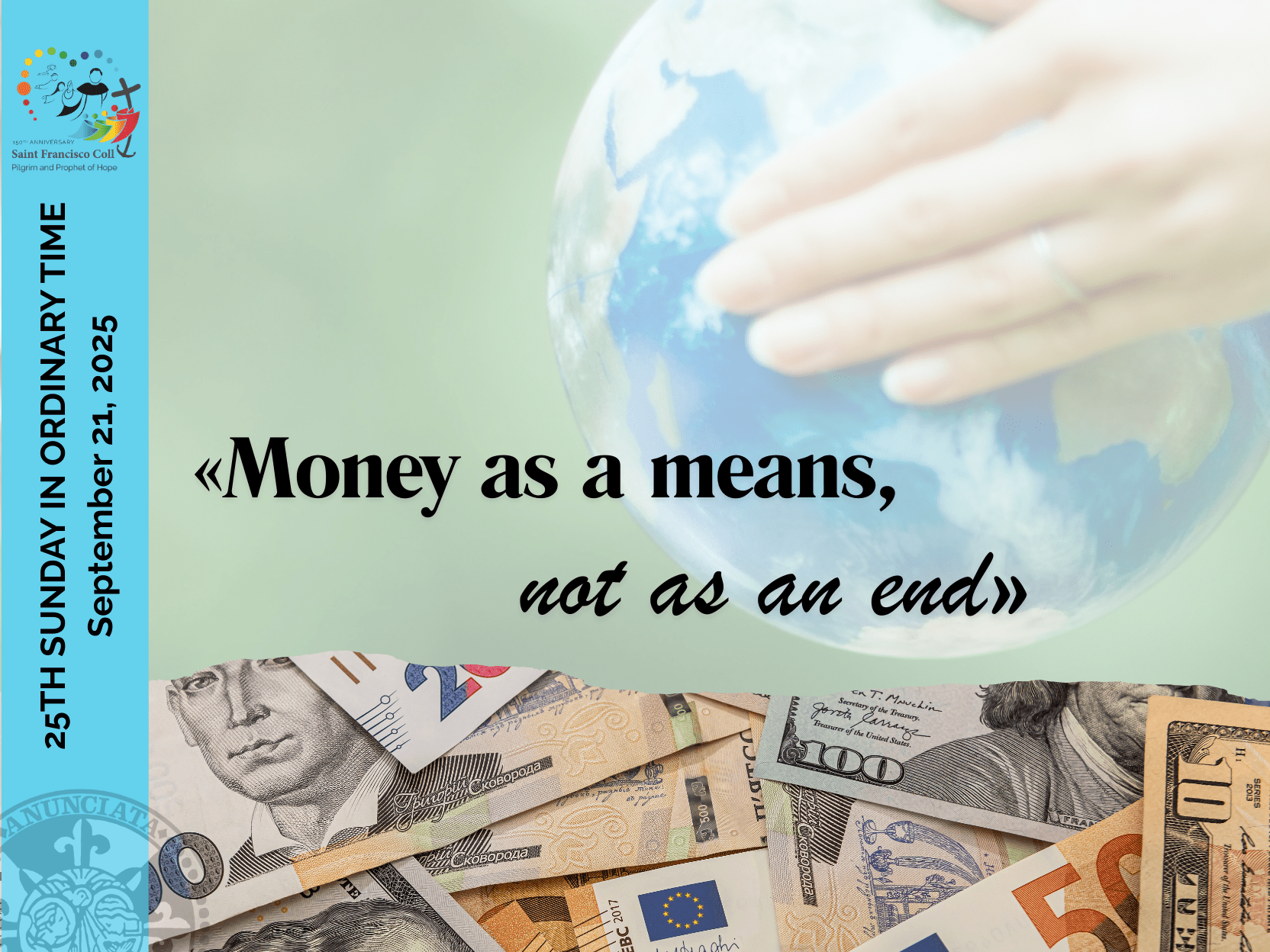
Like the steward, we may find ourselves having to choose between serving two masters: the rich master or the common good. Jesus’ proposal we already know: to make friends — that is, to work for the common good. The wealth of the world should serve this purpose: money as a means, not as an end. And Jesus makes it very clear: we cannot do a bit of both.
May the Lord grant us the wisdom to use material goods as instruments of love and service, building a more fraternal world.
Xavier Batlle Pèlach
Director, Common Good Management Area, FEDAC
Provincia San Raimundo de Peñafort