First Reading: (Is 55:6-9)
“My plans are not your plans, nor are your ways my ways.” I like to think that God always looks upon the good of his creatures. He invites us to follow the paths that are most appropriate for making the Kingdom present.
Second Reading: (Phil 1:27)
“The important thing is that you live a life worthy of the Gospel.” For St. Paul, life or death takes second place. Knowing Jesus makes him concerned only with remaining faithful to his Lord.
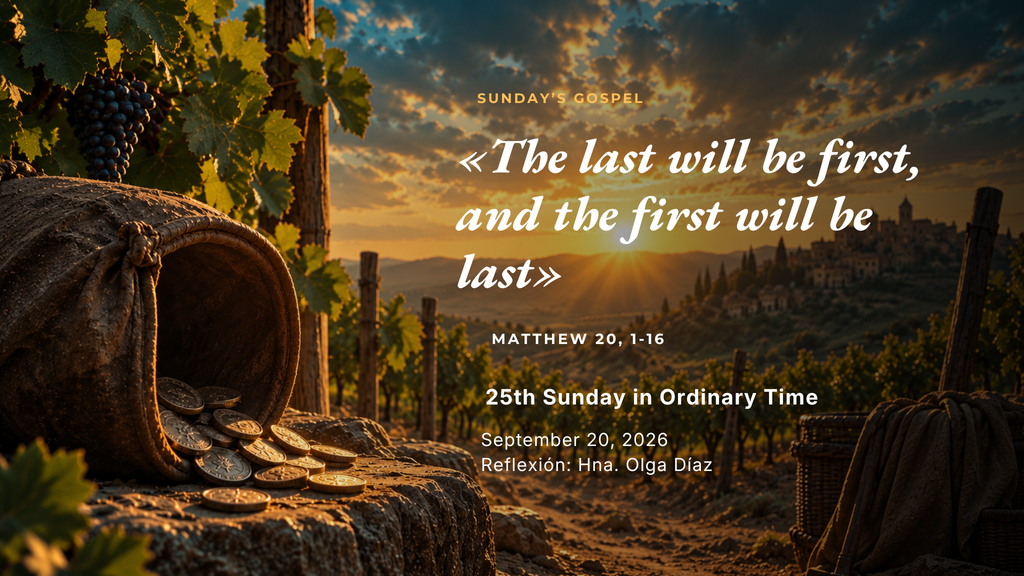
Gospel: (Mt 20:1-16)
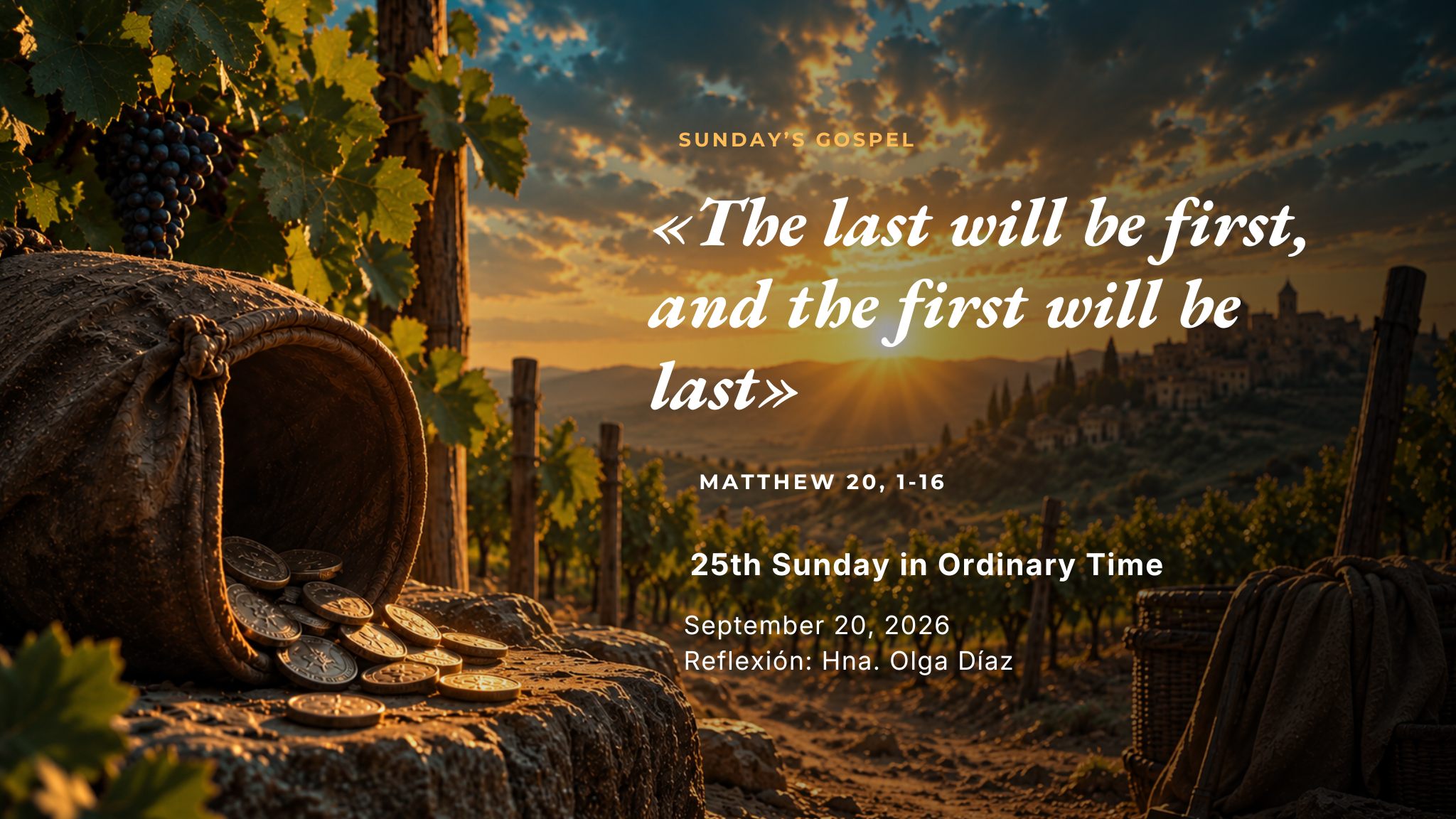
The parable of the workers reflects a custom that existed in many villages in ancient times. Day labourers would get up early and go to the village square, waiting to be hired by those who needed their services. Their work was their only source of income. It was a blessing to have the day’s wages guaranteed. There was not enough work for everyone, but they remained there. As time passed, discouragement grew: some gave up and went home, while others persevered and managed to find work, even at midday or towards the end of the afternoon. They continued waiting and eventually found work. Their perseverance bore fruit. This is the attitude of the servant: “Here I am, Lord. I have nothing and I need everything.”
This is what moves us in God’s goodness: “Go into my vineyard too.” It does not matter how much they have worked; he is always ready to come to the aid of those in need.
The agreement with the first workers was based on justice; that with the last was an act of great mercy. Christ’s heart makes them equal in the reward because, more than the fruit of their work, he cares about their need. Giving the last ones a denarius was not demanded by justice, but by the goodness of a compassionate person who seeks to alleviate people’s needs. Giving a denarius to those who came at the first hour was what had been agreed upon; it was simply fulfilling justice.
Sr. Olga Díaz
Rosa Santaeugenia Province