Gospel: Matthew 10:37-42
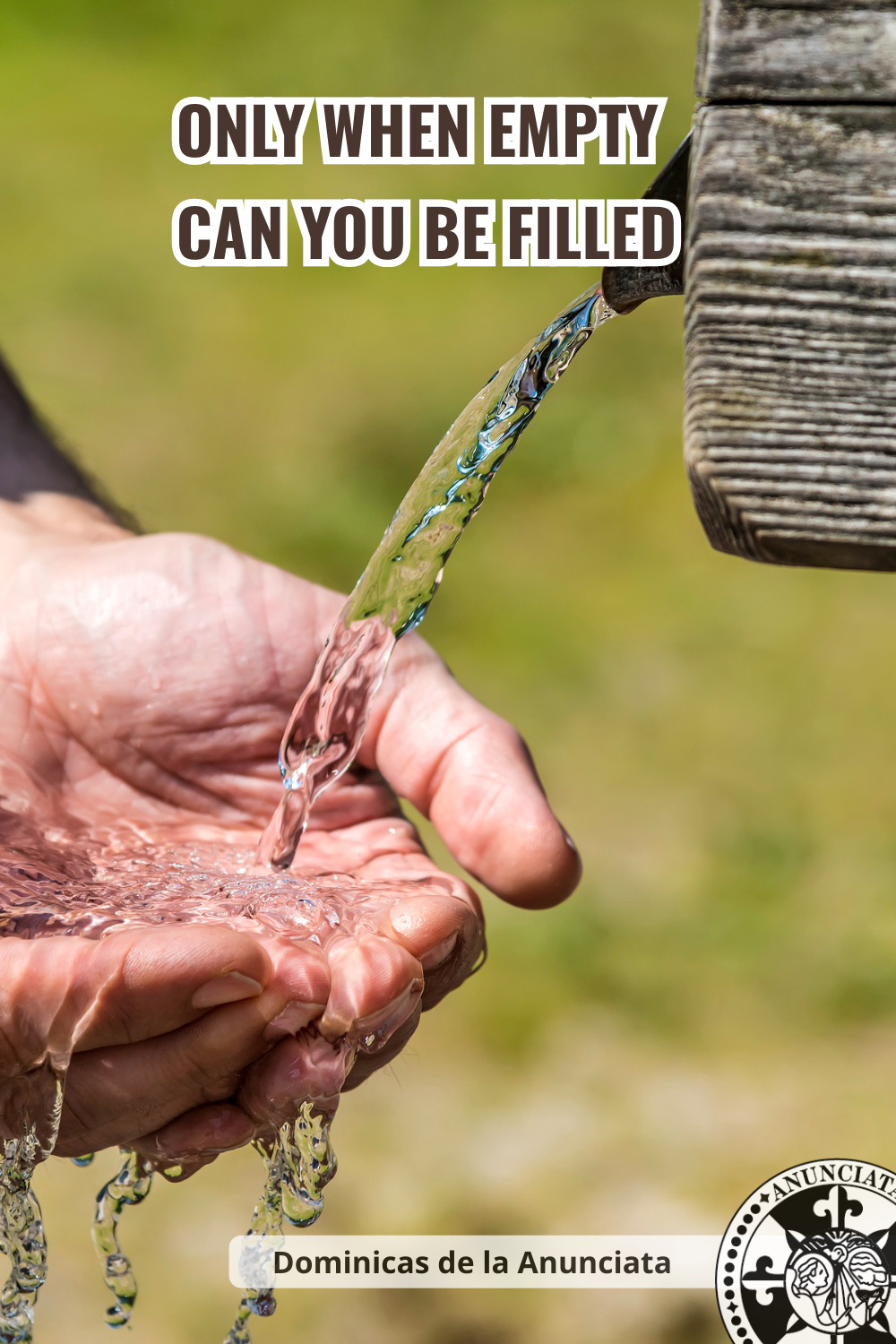
ONLY WHEN EMPTY CAN YOU BE FILLED
The first statements the evangelist records in this passage are unsettling. They make us open our eyes and wonder how such words could be attributed to Jesus, for they seem to challenge something intimate and fundamental to every person: family ties. Yet Jesus is not diminishing human love here; He is placing it in perspective. He compels us to ask what truly occupies the centre of our lives.
This is not about despising family. Jesus Himself wept for His friends, loved His parents, and allowed Himself to be accompanied by those close to Him. What He challenges is something else: the human tendency to turn even our noblest affections into shelters where we avoid growth, commitment, or self-giving. Sometimes we love the comfort of our loved ones so much that we end up abandoning the truth. Or we long so deeply to be accepted that we no longer dare to live authentically.
We live in a curious age: never have we spoken so much about relationships and emotions, and yet we often find ourselves distracted, entertained, numbed, fragmented, and unable to sustain deep commitments. Everything competes for our hearts and our attention: success, image, comfort, fear of disappointing others, the need for approval. Into all this noise Jesus speaks a radical question: “What are you willing to place first?”
He then adds an even more challenging statement: “Whoever does not take up his cross and follow me is not worthy of me.” Today the cross is rarely made of wood. It takes different forms: the patience required with a child, the silent weariness of caring for someone who can no longer care for themselves, the exhaustion of continuing to believe when everything seems to be falling apart. The modern cross is almost always silent; perhaps that is why it is so difficult to recognise.
Jesus does not idealise suffering. He does not say, “Seek crosses.” He says something far more human: “Do not run away from what it will cost you to love truly.” Genuine love always takes the shape of self-giving. It is not selfishness. It is learning to leave things behind in order to give oneself completely in His service, because only when empty can you be filled. He is the beginning and the end of all things. To love and to act in His name. To look upon others with new eyes.
Then comes one of the great paradoxes of the Gospel: “Whoever finds his life will lose it, and whoever loses his life for my sake will find it.” Our culture is obsessed with “finding oneself”. Yet this search often traps us in an endless maze of self-affirmation. Jesus proposes the opposite movement: we find ourselves when we stop revolving obsessively around ourselves.
There are people who possess much and yet live empty lives. And there are others who seem to have lost time, energy, and recognition for the sake of others, yet possess a mysterious fullness. It is as though life only acquires meaning when it is shared.
The passage ends in a discreet, almost domestic way: offering a cup of cold water. Nothing spectacular. No miracle. No heroic feat. Just a simple gesture. Yet Jesus reveals something immense here: the Kingdom of God is also found in what is small.
This is profoundly relevant today. We have turned greatness into spectacle. Everything must be seen, published, measured, displayed. Yet the Gospel insists on a different logic: the world is sustained by countless cups of water that no one applauds and no one notices. A conversation that saves someone from discouragement. A teacher who listens. A nurse who gently holds a hand. A friend who remains. A person who serves without drawing attention to themselves.
Perhaps the true contemporary problem is not the lack of information or education, but the loss of depth. We know many things, yet we dwell too little within our own lives. And this text from Matthew comes precisely to awaken us. It reminds us that following Jesus is not about adding one more layer to existence, but about reorganising from within the hierarchy of our loves.
In the end, the Gospel does not ask how much we possess, nor even how much we know. It asks something more decisive: who occupies the centre of our hearts and what we are willing to give out of love.
And perhaps there, in that uncomfortable yet luminous, revolutionary and radical question, faith truly begins: the faith that shatters our altars of comfort and teaches us to live with an open heart.
Laura Burgos, Fedac
Provincia San Raimundo de Peñafort