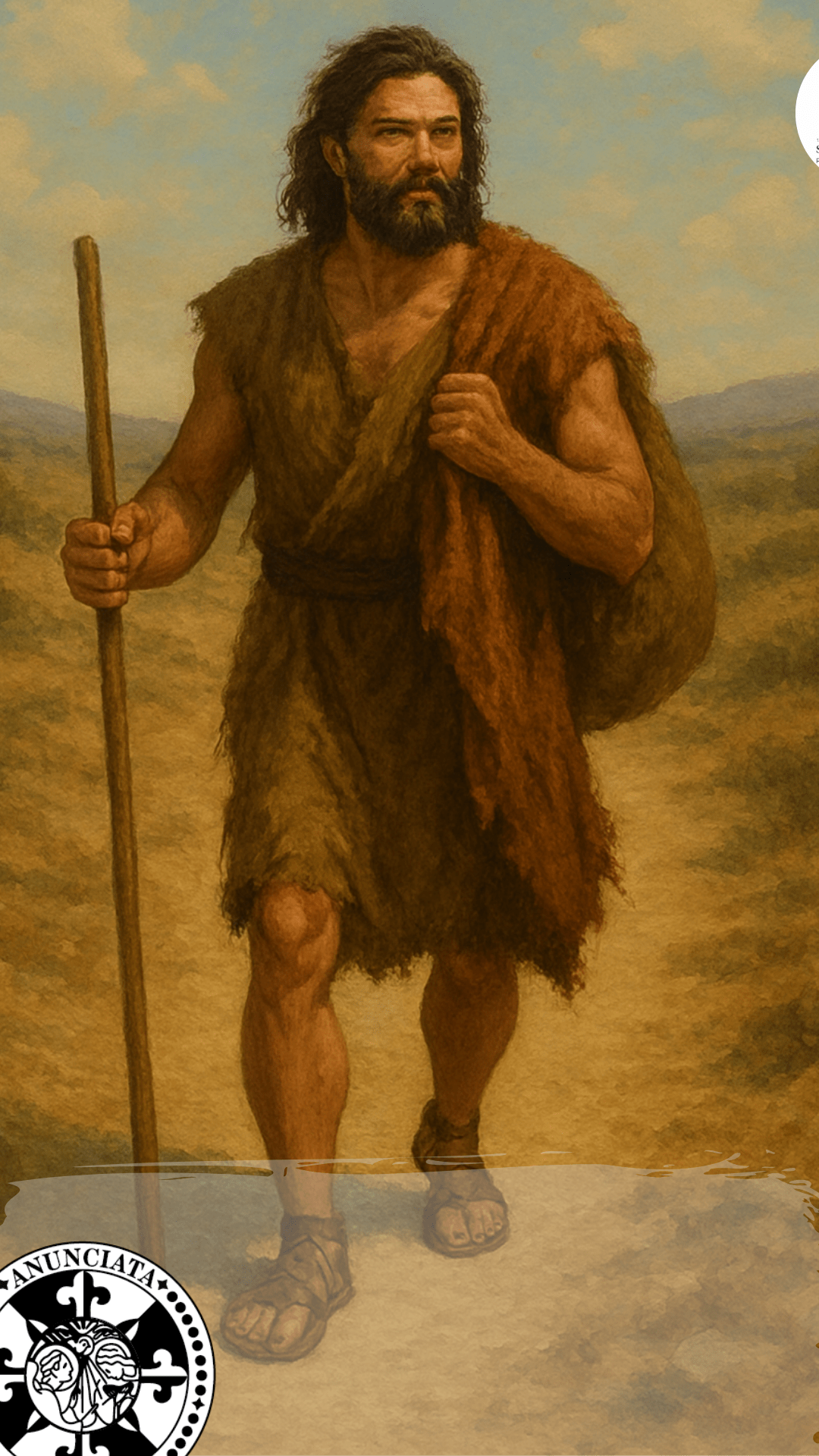
We are in the second Sunday of Advent, a liturgical season that invites us to awaken and prepare our hearts for the coming of the Lord. The figure that emerges strongly is John the Baptist, the forerunner, whose call to transformation and conversion seeks to prepare the way for Jesus.
In the first reading, Isaiah 11:1-10, we find a beautiful passage that presents a profoundly renewed vision of leadership, justice, and peace—the world God desires for humanity.
The shoot that springs from the stump of Jesse represents a humble beginning filled with hope. This new life emerging from an apparently dead stump symbolizes the possibility of renewal where all seemed lost. Jesse, the father of David, evokes a weakened royal line, yet from this fallen trunk God brings forth something new. The message is clear: even when all seems broken, God can begin again with us.
The text describes the future king—identified by Christian tradition as the Messiah—as one guided not by human interests but by the Spirit of God: wisdom, understanding, counsel, fortitude, piety, and fear of the Lord. The images of the wolf dwelling with the lamb and the child playing near the serpent are not merely poetic; they express a peace so deep that even natural enmities fade away. It is a prophecy of the restoration of all creation. The world becomes again what God intended from the beginning: a place without fear, violence, or threat.
In the second reading, from the letter of Saint Paul to the Romans (15:4-9), we find a luminous reflection on hope, unity, and welcome—three essential pillars of Christian life. Paul invites us to return to what is essential: living from the hope offered by Scripture, allowing God—source of patience and consolation—to sustain us, building unity in daily life, and welcoming others as Christ welcomed us. Salvation is for all, and our attitude should reflect God’s infinite mercy.
In the Gospel of Matthew 3:1-12, the striking figure of John the Baptist appears, the great prophet who prepares the coming of Jesus. His presence in the desert is meaningful: a place of silence, encounter with God, and purification. There, where nothing distracts, resounds the essential call: “Repent, for the Kingdom of heaven is near.” His preaching is direct and urgent—not a call to mere remorse, but to a deep change of heart and life. The Kingdom is near; it breaks into the present and asks for open hearts.
“Prepare the way of the Lord.” Conversion is not only avoiding evil but opening space for God: purifying the heart, simplifying life, straightening what is crooked. Matthew describes John’s austere lifestyle: simple, essential, far from distractions. His life itself is a message. His authenticity denounced excess and reminded people that God is the essential. For this reason the people sought him out: in John they found coherence, truth, and spiritual authority.
Let us ask the Lord that the voice of John the Baptist transform us into heralds of God’s justice and mercy. May his fire of love purify and convert us, and may this Advent truly prepare us to welcome the Lord into our decisions, relationships, and priorities. May John’s voice resound today wherever there is silence, authenticity, and sincere searching. Amen.

Sr. Ildete Magalhaes Leite, OP
Province of Rosa Santaeugenia