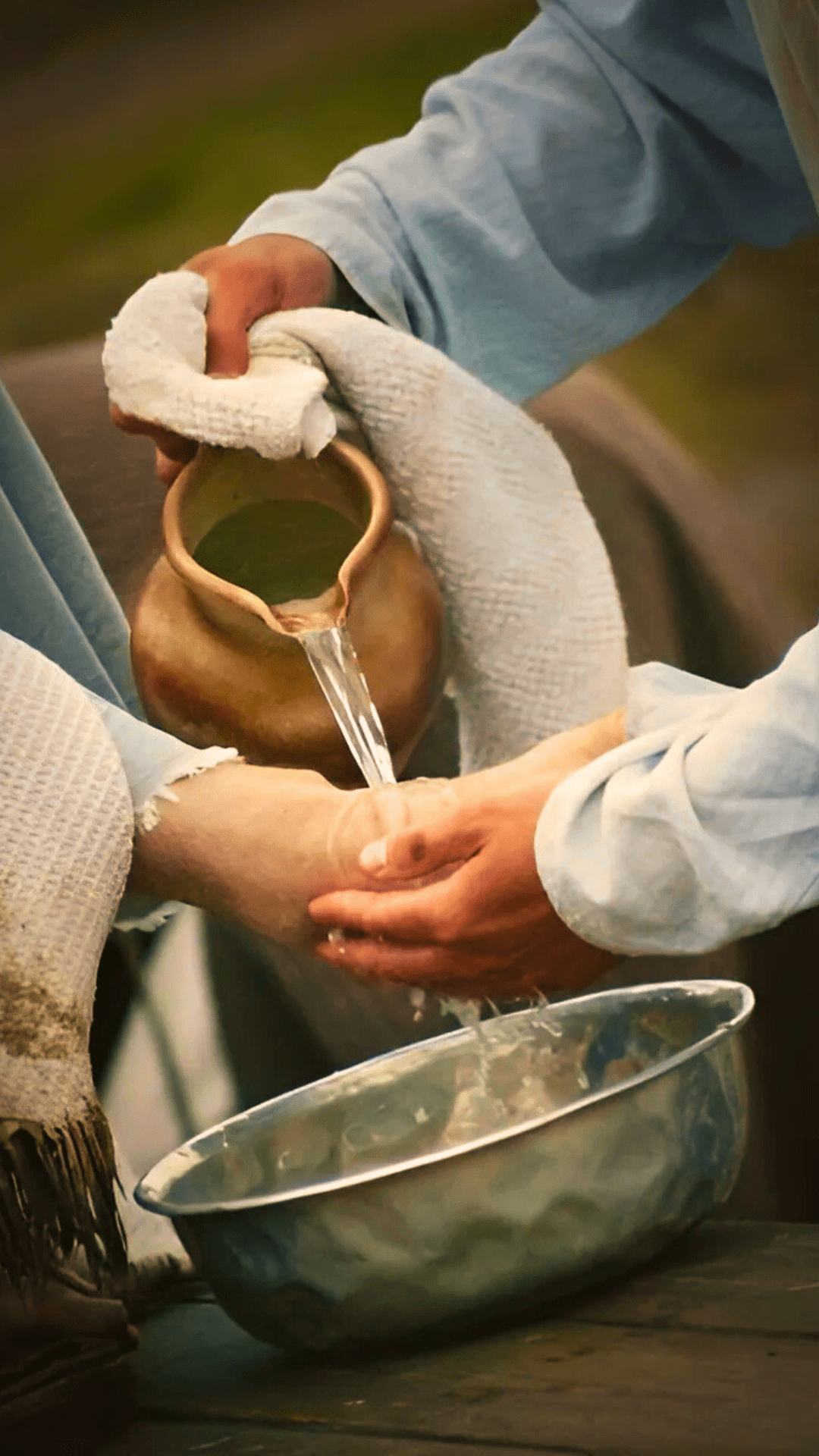
With Holy Thursday, we begin the Paschal Triduum; the time of Easter is drawing near—the Resurrection of Jesus. On this day, the Word of God reminds us of Jesus’ command: “Wash one another’s feet.” In other words, love one another as I have loved you. Today, as Christians, we celebrate the day of fraternal love—a love that goes beyond sentimentality, a love that is capable of serving, of humbling oneself to wash the feet of another, just as the Master did. It is a love that invites us to live in community, to be nourished at the same table, to share the same bread, without division, as brothers and sisters.
Before His death, Jesus made His mission clear to the disciples: following Him means girding the towel, lowering oneself, and washing the feet of others. We know that this practice was considered the most humiliating task—only slaves would wash their masters’ feet. Yet Jesus insists that a true follower must be a servant, someone who overcomes pride, selfishness, and arrogance.
The patience and pedagogy of Jesus know no bounds. He first demonstrates through action, and then, to ensure His disciples understand the lesson, He asks them and reminds them of what they must do: “Do you understand what I have just done for you? You call me Teacher and Lord—and rightly so, for that is what I am. If I, then, your Lord and Teacher, have washed your feet, you also ought to wash one another’s feet.” Love, service, fraternity, sisterhood, self-giving, and surrender—these are the great lessons Jesus leaves us, a profound calling for every disciple today to put into practice.
On this day, we also remember and make present the Sacrament of the Eucharist—the love of Jesus that is not content with simply dying, but remains with us forever. Jesus is broken and shared for all. He loved us to the end, and for that reason, He made an eternal covenant with humanity. To receive Jesus in the Eucharist is to commit ourselves to live with the same sentiments and actions that He lived.
In the midst of our world—rushed by the demands of work, driven by consumerism, waste, use and discard, and what is disposable—we are invited to ask ourselves: How can we live this message that Jesus leaves us? During these holy days, let us pause, silence our inner being, reflect and ask: How can I prepare for Easter? Am I capable of humbling myself, overcoming my pride, and serving others with simplicity and humility? Do I build and strengthen the community through my life? Do I recognize the Eucharist as the source of love and the nourishment that gives eternal life?
Sr. María Santos Martínez
Telemán Community, Guatemala
Province of St. Martin de Porres.