Mass of the Passion: Is 50:4–7 / Ps 21 / Phil 2:6–11 / Mt 26:14–27:66
Blessing of Palms: Mt 21:1–11
Palm Sunday of the Passion of the Lord inaugurates the annual celebration of the Paschal Mystery of the Passion and Resurrection of Jesus Christ. It also commemorates Jesus’ entry into Jerusalem.
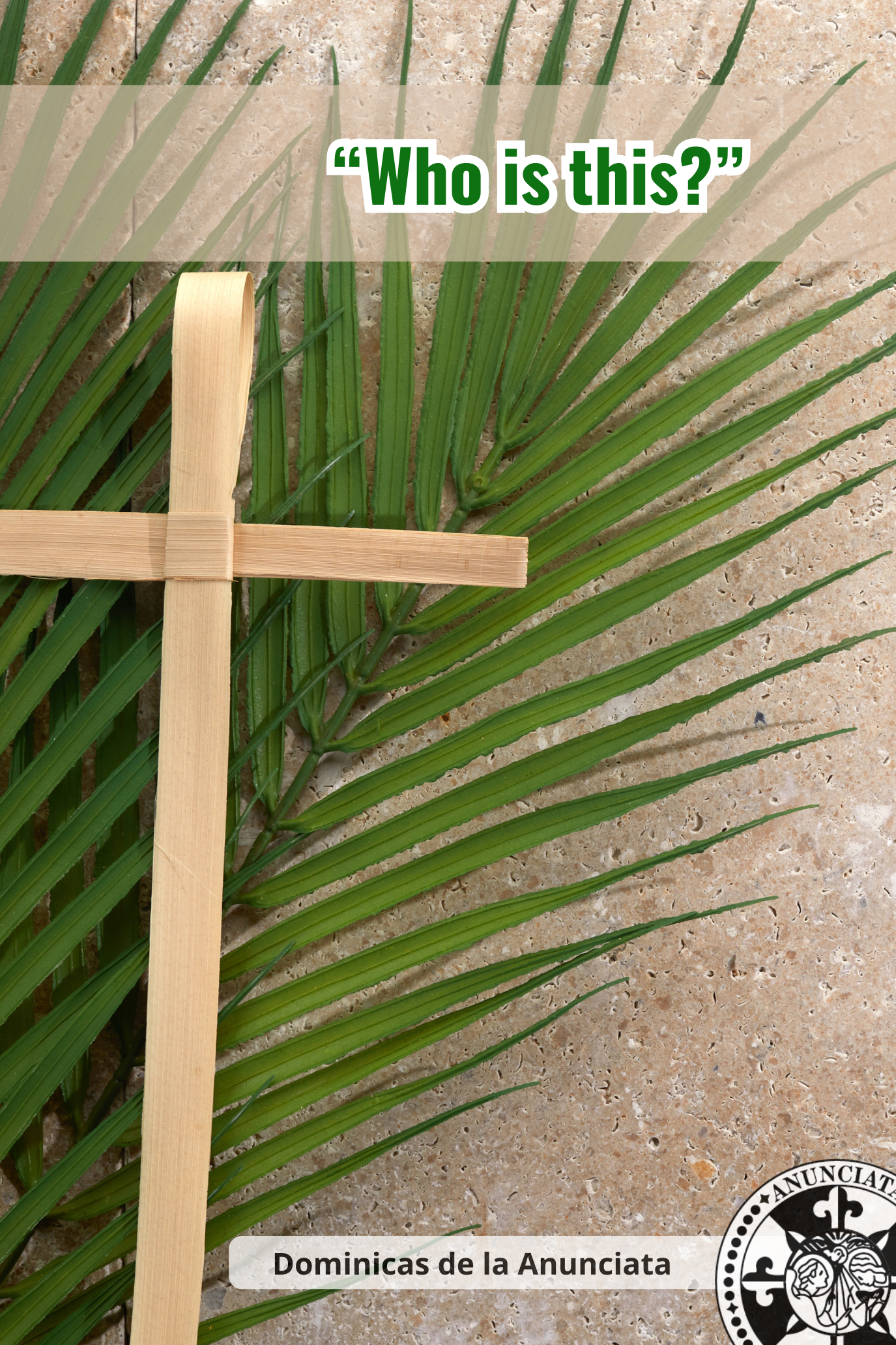
The entry into Jerusalem is a prophetic gesture; that is, the message is communicated through the actions of Jesus and those who accompany Him. He prepares it carefully and is fully aware of what He is doing. The evangelist emphasizes that what the prophets had foretold is being fulfilled. Thus, Jesus enters Jerusalem as a king, not as a warrior or conqueror, but as a king of peace. He is acclaimed by His followers as the “Son of David” and as the one who comes “in the name of the Lord,” yet with great humility and simplicity. And it leads people to ask: “Who is this?”
- … betrayed, unjustly judged, humiliated, and crucified. Yet it is also the hour of His self-giving in love. In the midst of injustice and the silence of God, forgiveness, hope, and the unwavering fidelity of the Son emerge.
Where am I in this Passion?
Among those who flee, those who accuse, those who look on from a distance?
- While Pilate was sitting on the tribunal, his wife sent him this message:
“Have nothing to do with that righteous man, for today I have suffered greatly in a dream because of him” (v. 19).
Only Matthew mentions Pilate’s wife in a single verse of the account. What might she have been like? It must have taken great courage to interrupt her husband’s work and send him an urgent message. Her dream must have been very powerful, causing her great distress and compelling her to speak. What moved her to try to influence her husband’s decision?
The Gospel presents her as a woman of determination, action, integrity, and strength. She senses that an injustice is being done. She does not ask for mercy; she simply believes that Jesus is innocent. She tries to persuade Pilate to act justly, regardless of the consequences. There, she was the only one defending Jesus.
Have you ever found yourself moved to denounce injustice?
But you, Lord, do not be far off (Ps 22:20).
I can find no better way to enter this Holy Week than to take the question “Who is this?” as an invitation to deepen our knowledge of Jesus Christ and to listen attentively to the Word and the liturgy of this Holy Week and Easter.
Keeping this firmly in mind, let us not waste the pedagogy by which the liturgy, in these holy days, gradually leads us toward the moment from which the whole meaning of our faith flows and which will fully reveal WHOM we celebrate.
Sr. Carmen Casellas Rabaseda OP
Provincia San Raimundo de Peñafort