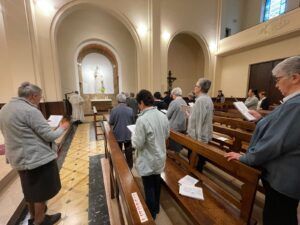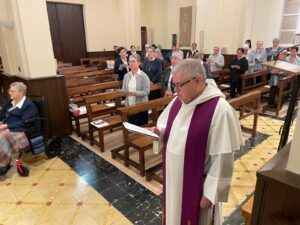
Today’s day began with the celebration of the Eucharist. The readings from the Word of God served as an introduction to what would later be the day’s two talks.
In his homily, Fr. Jesús Díaz Sariego, OP, referred to the biblical passages: Daniel 3:14 – “Blessed be God who sent an angel to save His servants…” and John 8:31-42 – “If God were your Father, you would love me, for I came from God… and I have not come on my own.”
In his presentations, Fr. Jesús developed the theme: What can help us follow Jesus?
He highlighted two key points:
- Purifying our intentions.
We must present and act as authentic persons; to be who we truly are, not hiding behind a mask. For this, it is necessary to integrate all parts of our self, to purify our intentions and to be reconciled with ourselves—accepting who we are with serenity. The goal is to be more realistic and avoid the narcissism so prevalent in today’s society.
Nowadays, transparency is highly valued: to show through our actions who we truly are. It is necessary to move away from activism that fills our time with activities, preventing reflection, and fleeing from silence—which is essential for reconnecting with ourselves. We must empty ourselves in order to be filled with what truly matters.
- Developing an attitude of humility, understood today as the acceptance of truth: embracing our past, our roots, and the present as it is—avoiding the delusions of grandeur of the past. In this context, he cited John 13:8: “Unless I wash you, you have no part with me.” When we are more humble, we generate greater trust and are more credible in the eyes of our contemporaries.
He also referred to the current lack of clear and positive role models—both from the past and today. Young people do not have solid references to help them shape their vocation. It is essential to purify our expectations, our actions, and our future projects. An interesting note he highlighted was that the doctrine of recent Popes continues to serve as a reference for some sectors of today’s society. Pope Francis’ thought holds a globally recognized leadership.
He also emphasized the importance of developing moral authority and the will to reach agreements, as well as abandoning empty arguments, dialectical battles, and sterile confrontations, without ever tiring of dialogue. As the Pope says: “No one can face life in isolation.” We need a community that helps us dream together. When we fight alone, we risk chasing shadows that do not exist.
He also stressed the value of recognition, which today holds great importance in all areas of life—including religious life. It is essential that each sister feels recognized and appreciated.
In his talk, he underlined the importance of cultivating a grateful attitude and being able to express it. We need humility to acknowledge the value that others have in our lives. To reinforce this point, he cited the Emmaus passage (Luke 24:28-32): “Were not our hearts burning within us while he was speaking on the road…?”—referring to the Eucharistic dimension of life as a free gift, to be broken and shared.
Finally, he briefly addressed—with concrete examples—the relevance of fundamental concepts in religious life such as moral authority, power, obedience, vulnerability, fragility, synodality, and responsibility. These are powerful realities, essential in community life, and must be considered carefully in the context of the Provincial Chapter.
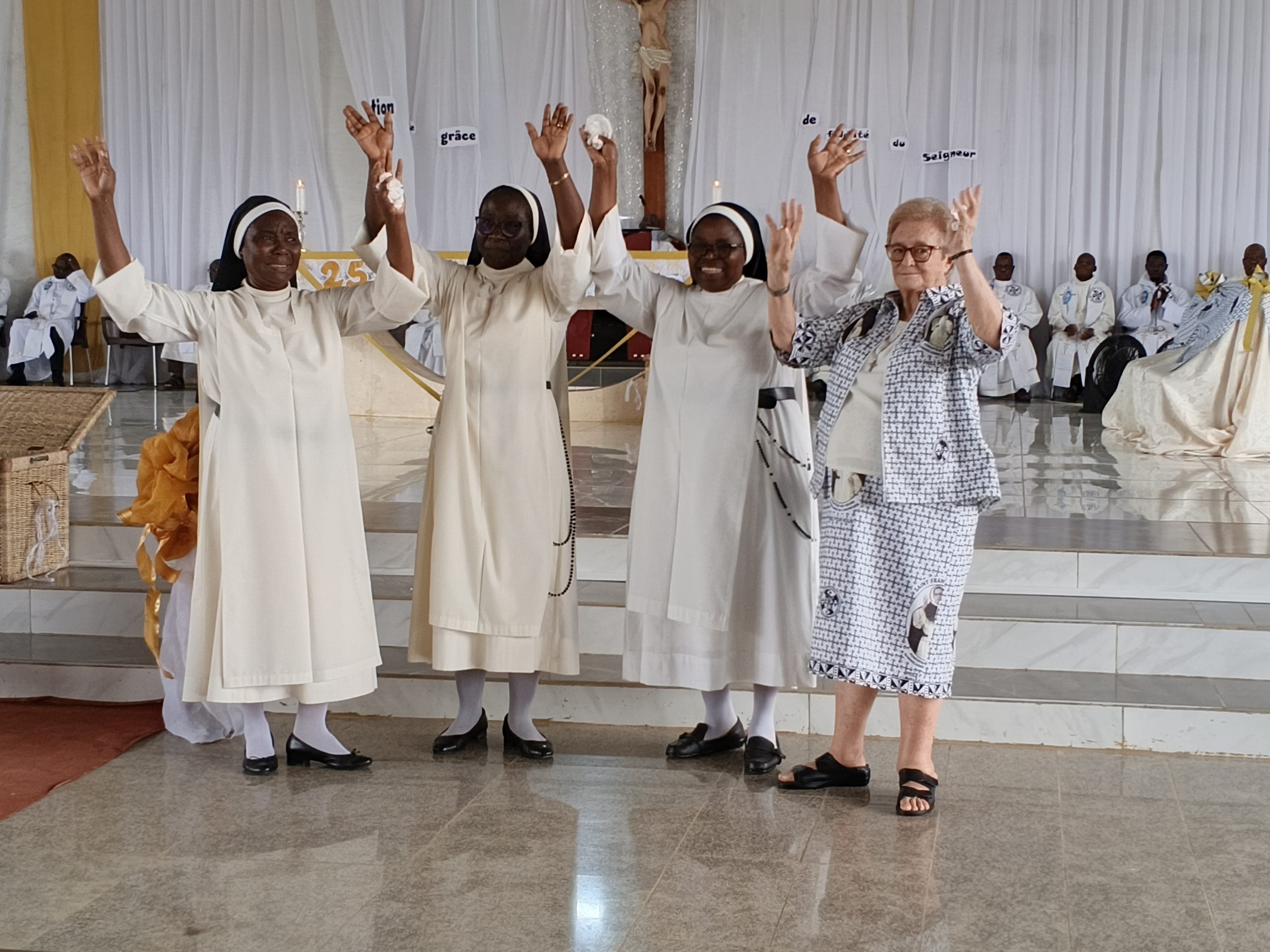
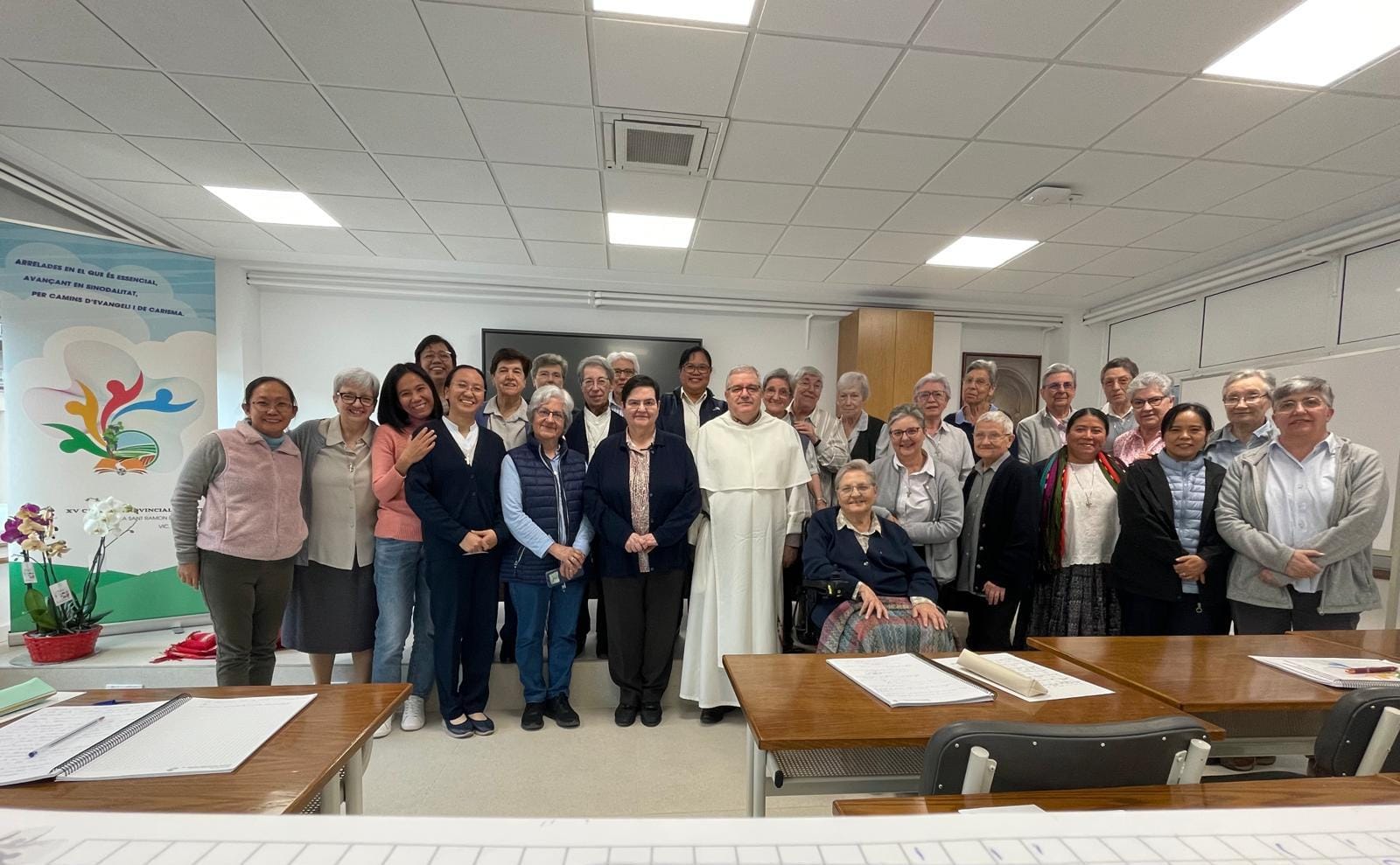
Capitular Sisters