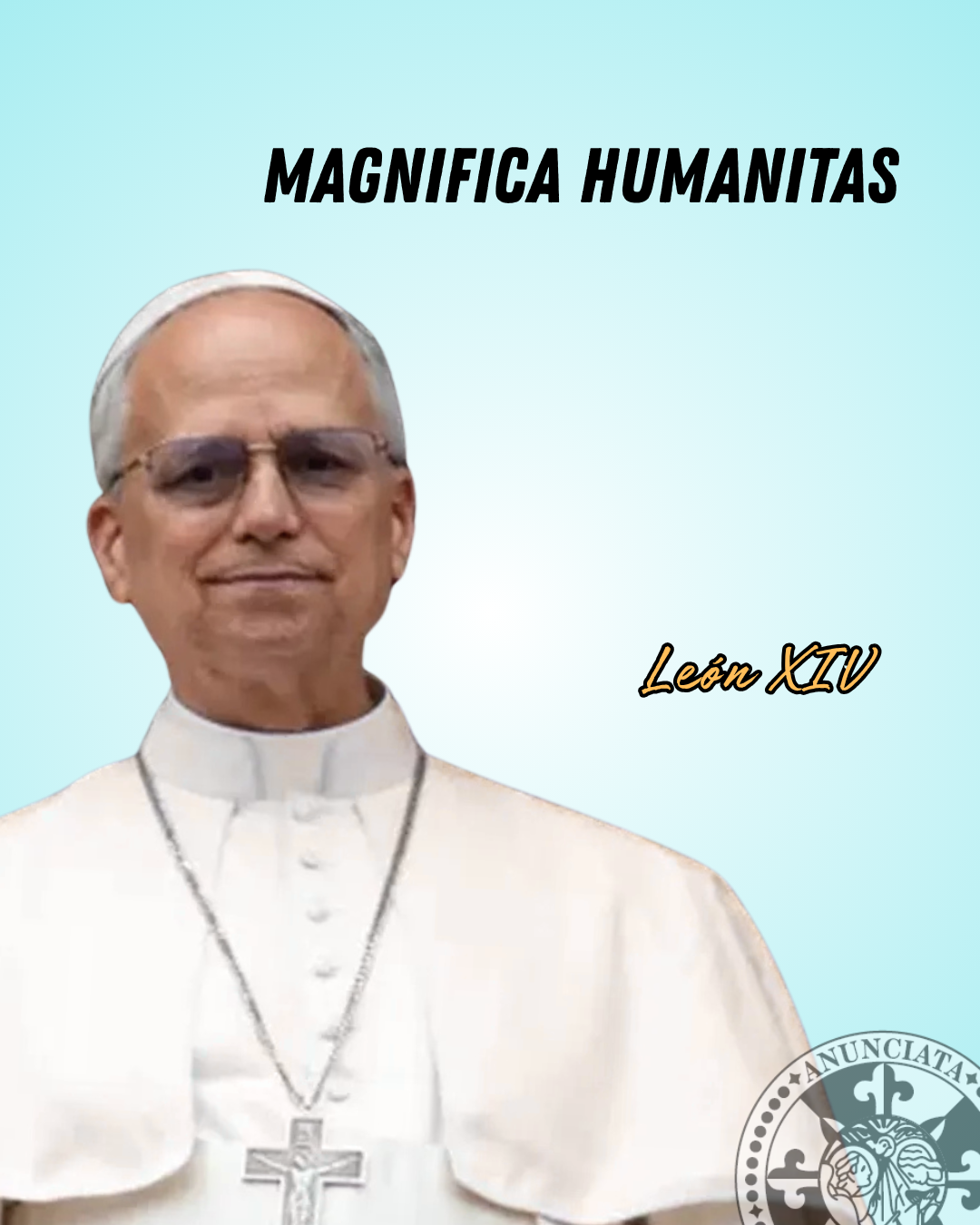
His Holiness Pope Leo XIV has today released his new encyclical titled “Magnifica Humanitas,” an extensive magisterial document reflecting on the dignity and centrality of the human person in the context of the rapid development of artificial intelligence.
The text, officially presented at the Holy See Press Office, addresses the ethical, social, and spiritual challenges emerging in an era marked by automation, massive data use, and the growing influence of algorithmic systems in everyday life. According to the Vatican, the encyclical seeks to “offer a moral compass” in the face of a technological shift that is redefining work, education, communication, and human relationships.
The human person at the center of the technological debate
In “Magnifica Humanitas,” Pope Leo XIV insists that technological progress must always be subordinated to the integral good of the person. The document warns against the risk of reducing the human being to a “processable data point” or a mere cog within automated decision-making systems.
It also stresses that artificial intelligence, while a valuable tool for human development, must not replace human conscience, freedom, or moral responsibility.
A call for a global ethics of artificial intelligence
The encyclical proposes the creation of an international ethical framework involving governments, technology companies, educational institutions, and religious communities. The Pope calls for a “global alliance for human dignity” ensuring that technology serves humanity rather than conditions or replaces it.
It also calls for ethical training for technology developers and the protection of the most vulnerable against possible forms of digital exclusion or algorithmic inequality.
Education, work, and social justice
Another central focus of the document is the impact of artificial intelligence on the world of work. “Magnifica Humanitas” warns about the possible disappearance of traditional jobs and the need for a just transition that leaves no one behind.
In education, the Pope encourages integrating technology without losing the human dimension of learning, promoting critical thinking, creativity, and the integral formation of the person.
A message of hope
Far from a pessimistic vision, the encyclical concludes with a message of hope: artificial intelligence can become an opportunity for human flourishing if guided by wisdom, responsibility, and solidarity.
“The future is not written by machines, but by human freedom enlightened by truth and love,” the text states in one of its final passages.
With “Magnifica Humanitas,” the pontificate of Leo XIV takes a firm stance in the global debate on artificial intelligence, inviting humanity not to lose sight of what it considers essential: the irreducible dignity of every person.